
Climb & Jump: Obby 3D Tower
Metagame.LtdAdventure
3.59.00 Reviews
- Version
- 1.2.1
- Installs
- 5.00M
- Age Rating
- Everyone
Screenshots

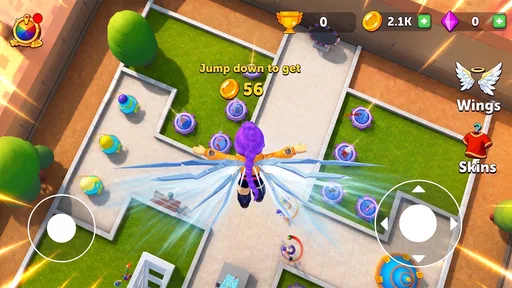
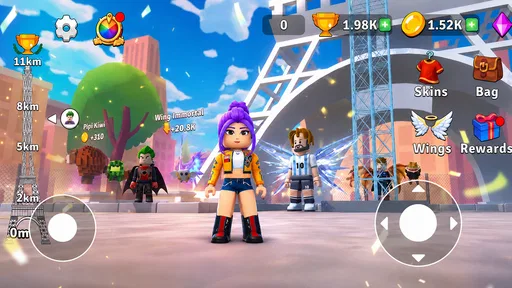
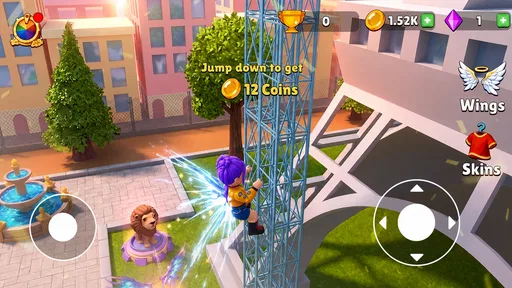
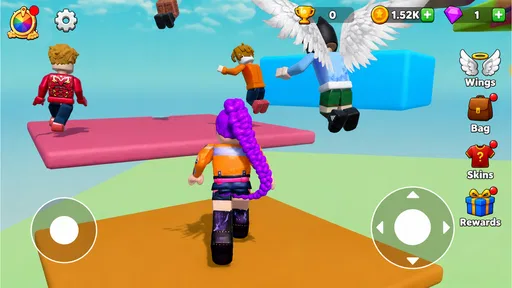
Our Review of Climb & Jump: Obby 3D Tower
 Analysis by Appyee
Climb & Jump: Obby 3D Tower is an adventure game built around a simple idea: guide your character upward through a three-dimensional obstacle tower using careful movement, jumps, and patience. I like that the concept is immediately understandable. You do not need a long explanation before starting, and the goal gives every attempt a clear purpose. At the same time, this kind of game lives or dies by how fair its movement feels, so my opinion depends less on the short premise and more on how consistently the tower responds to the player.
Metagame.Ltd presents it as a free game for Everyone, with a minimum operating-system requirement of 7.1. It has passed the one-million-install mark and holds an average of 3.5 from roughly six hundred ratings. Those figures suggest that the game has found a sizeable audience, while the middle-of-the-road score is a useful reminder not to expect a universally smooth experience. I would approach it as a quick obstacle-course game rather than a deep adventure with a large story.
How the tower feels to play
The central appeal is the rhythm of climbing, stopping, judging the next gap, and trying again. A good obstacle game makes a jump feel like a small puzzle rather than a blind gamble. I found the most satisfying moments came when I slowed down before a difficult section, watched the platform arrangement, and treated each landing as a checkpoint in my own plan rather than rushing upward.
That approach matters because vertical levels create pressure naturally. When the character is already high in the tower, a mistake feels more costly than one made near the beginning. The game does not need a complicated plot to create tension; the height itself supplies it. For players who enjoy repeating a short challenge until their hands learn the timing, this can be more engaging than a conventional adventure with constant dialogue or map exploration.
My practical advice is to use the first attempts as reconnaissance. Instead of trying to reach the top immediately, pay attention to where your character tends to overshoot, how much room you need before a jump, and whether a platform is safer to approach from one side. This is one of the less obvious strengths of a tower format: every failed run can teach you the shape of a route, even when the game does not provide a formal tutorial.
Short sessions suit it well. I can imagine opening it while waiting for transport, taking a few attempts, and closing it without needing to remember a complicated story or inventory. It also works for someone who wants a game that can be understood by a younger player, since the age classification is Everyone and the objective is direct. Parents should still remember that a simple rating does not automatically describe the amount of repetition or frustration a child may tolerate.
Progress is measured in control, not just height
The important kind of progress here is personal. Reaching a section that previously stopped me feels meaningful because I know the improvement came from better timing and positioning. That makes the game appealing to players who enjoy mastery-based challenges, especially those who prefer learning a route over collecting equipment or building a character.
There is also a trade-off. If you want a strong sense of permanent advancement, a tower-climbing obstacle game may feel thin compared with a platform adventure that unlocks abilities, adds story chapters, or offers a broad world to explore. The climb can be rewarding, but the reward is mainly the successful attempt itself. I would not choose it as my main game if I needed a long-term progression system to keep me interested.
The pressure can become repetitive when the same style of challenge is presented without enough variation. Repetition is not automatically a flaw in an obstacle game, but it needs to feel purposeful. I recommend playing in small bursts rather than forcing a long session after several failed attempts. A short break often helps more than continuing while annoyed, because frustration makes hurried jumps and poor decisions more likely.
One useful routine is to separate the run into three mental stages. First, identify the next safe landing. Second, make the jump without changing your plan halfway through. Third, pause after landing instead of immediately moving toward the next obstacle. That pause is easy to overlook, yet it reduces accidental slips and gives you time to read the tower. It is a simple habit that makes a precision game feel more manageable.
Fairness matters more than free entry
The game is free to install, which lowers the barrier for trying it. That is helpful when you are unsure whether this style of obstacle course suits you. However, “free” should not be treated as a complete statement about spending. A free download can still have optional purchases or other commercial elements, and the information available for this title does not establish which purchase systems are present. I would therefore avoid assuming that the game is entirely free of spending prompts.
That uncertainty is especially relevant in a game where progress depends on repeated attempts. If a player is ever encouraged to spend money to reduce waiting, recover from failure, or gain an advantage, the experience should be judged differently from a purely skill-based climb. I did not find a confirmed purchase detail that would let me describe such a system responsibly, so my recommendation is practical: install it expecting the core download to cost nothing, but review any in-game prompt carefully before confirming a payment.
Fairness also has a gameplay side. An obstacle should feel difficult because of timing, positioning, or observation, not because the controls behave unpredictably. When I assess a game like this, I look for a clear relationship between the input and the result. If a jump fails, I want to understand whether I mistimed it or approached at the wrong angle. That clarity is more important than flashy presentation because it determines whether failure motivates another attempt or simply feels arbitrary.
For a competitive player, the absence of confirmed competitive systems is important. I would not assume that climbing the tower places you on a worldwide leaderboard, gives you a rank, or creates a player-versus-player contest. Without a confirmed system of that kind, the fairest way to view the game is as a personal challenge. You can compete with your own previous performance, but I would not download it specifically for esports-style comparison or social ranking.
Where it differs from other adventure games
Compared with a story-led adventure, this title is much more focused. There is no need to manage quests, read long conversations, search for crafting materials, or remember a large map in order to understand what you are doing. That makes it a better fit for someone who wants immediate action. The downside is that players who value narrative, exploration, puzzles with several possible solutions, or character development may find the tower too narrow.
It also differs from a traditional platform game because the three-dimensional climb changes how you read space. A side-view platformer gives you a fixed perspective and often makes distances easier to judge. Here, the camera and depth can become part of the challenge. That can make a successful landing more satisfying, but it can also create friction if a platform’s position is difficult to read before committing to a jump.
Against endless-runner games, the pace is usually more deliberate in spirit. An endless runner rewards quick reactions and continuous movement, while a tower course encourages stopping and planning. If you enjoy making a decision before each jump, this is likely the more comfortable choice. If you prefer constant speed, automatic forward motion, and score chasing, an endless runner may provide a cleaner fit.
The game is also a different proposition from a large premium platform adventure. A paid, content-heavy alternative may offer more polished level design, richer progression, and a more predictable spending experience because the purchase model is clearer from the beginning. This free title is easier to sample, but you should accept that its main attraction is the immediate climb rather than a broad package of content.
Who should try it, and who should skip it
I would recommend it to players who enjoy obstacle courses, repeated attempts, and the small satisfaction of turning a failed jump into a successful one. It is a sensible choice for casual sessions, for younger players who can handle repetition, and for anyone who wants a straightforward adventure game without a complicated setup. The one-million-plus install count also means it is not an obscure experiment with no audience, although popularity alone does not guarantee that its controls will suit you.
I would be more cautious if you dislike restarting, become irritated by precision movement, or expect every game to offer a strong story. Players who need accessibility options, detailed control customization, or clearly documented competitive features should check the in-game experience before committing their time. I would also skip it if I were specifically looking for a paid game with no uncertainty around optional spending, because the free label does not answer every question about purchases.
For a family setting, the Everyone classification makes the game easier to consider from a content standpoint, but the better question is whether the child enjoys patient practice. A child who likes trying the same jump repeatedly may find the tower rewarding. A child who expects constant rewards or rapid movement may lose interest quickly. I would let the player try a short session and watch whether failure leads to experimentation or immediate frustration.
What I would check before settling in
The current version is 1.1.7, and that gives prospective players a useful point of reference when checking compatibility or deciding whether their installation is current. The minimum operating-system requirement is 7.1, so the game is available to devices that are not running a recent system. Even so, compatibility on paper does not tell me how comfortable the game will feel on every screen size or with every control response.
I would begin by testing movement in a safe area rather than judging the entire game from the first difficult jump. Check whether the character stops when expected, whether the camera lets you judge depth, and whether your finger placement covers important parts of the view. These details have an outsized effect on a 3D obstacle course. A player using a smaller display may need a different grip from someone playing on a larger tablet.
I would also decide in advance how I want to handle spending prompts. Since the game costs nothing to download but its purchase structure is not established here, I would treat every optional button as something to inspect rather than tap automatically. That is not an accusation against the developer; it is simply good practice for any free mobile game. If the experience remains enjoyable without paying, the value is easy to understand. If progress feels tied to a purchase, that should influence whether it stays installed.
Another useful test is to play several short sessions at different times rather than deciding after one lucky or unlucky run. A tower game can feel excellent when I am focused and unnecessarily harsh when I am tired. Trying it in both situations reveals whether the challenge is genuinely engaging or only tolerable under ideal concentration. It also helps separate a temporary learning curve from a control problem that will continue to bother me.
A measured verdict on trust and value
My overall view is cautiously positive. This is best understood as a focused skill challenge, not a complete adventure world. The climb-and-jump premise is easy to grasp, the free entry makes experimentation simple, and the tower format creates natural tension without requiring a complicated story. I can recommend it to the right player: someone who enjoys practice, precision, and the satisfaction of reaching a higher section after several attempts.
I would not recommend it blindly to everyone. The average score of 3.5 from around six hundred ratings suggests that the experience has clear appeal but also enough friction to produce mixed reactions. That matches my own judgment: the concept is accessible, while the quality of the experience depends heavily on how fair the controls and obstacle layouts feel to you. A player who dislikes repetition may see the same simplicity as a limitation rather than a strength.
Metagame.Ltd has positioned the game in an approachable part of the adventure category, but the most important trust question is the relationship between free access and any optional spending. Because the purchase details are not established, I would keep expectations sensible and review prompts carefully. I would also avoid treating unconfirmed leaderboards, rewards, or competitive advantages as part of the game’s appeal.
After trying it, I would keep it installed for short breaks if I wanted a lightweight challenge that rewards concentration. I would replace it with a story-driven platform adventure for richer progression, or with a conventional side-scroller for more predictable depth perception. In other words, the game earns a recommendation as a compact tower-climbing test, provided you are comfortable with repetition and willing to judge its controls for yourself.
My final advice is to play for mastery rather than for promises. Start slowly, learn the safest approach to each jump, take breaks when frustration takes over, and do not assume that a free download answers every spending question. With those expectations, Climb & Jump: Obby 3D Tower can be an enjoyable, focused diversion; without them, its narrow design and possible uncertainty around optional purchases may make another adventure game a better choice.
Privacy and Permissions
See what permissions an app requests and how it handles your data.
- Wi-Fi connection information
- view Wi-Fi connections
- Other
- view network connections, full network access, control vibration, prevent device from sleeping, Google Play license check
Verdict
Strengths of Climb & Jump: Obby 3D Tower
- Simple controls make the climbing and jumping mechanics easy to learn.
- Bright 3D environments make each tower visually inviting.
- Short obstacle sections suit quick gaming sessions.
- Progressive challenges help improve timing and platforming skills.
- Playable offline, making it convenient for travel or limited connections.
Limitations of Climb & Jump: Obby 3D Tower
- Some levels may feel repetitive after extended play.
- Precise jumps can be frustrating when camera angles shift.
- Ads may interrupt the experience between attempts or levels.
- Progress can seem slow without optional rewards or purchases.
- Performance may vary on older phones with limited hardware.
Other Releases by Metagame.Ltd
View All
Left Or Right Perfect Dress Up
Puzzle4.0

Prison Escape: 3D Obby Parkour
Adventure3.9
Similar Picks in This Category
View All
Roblox
Roblox Corporation4.2

Pokémon GO
Niantic, Inc.3.5

Ninja warrior: legend of adven
TOH Games4.6

Ninja Arashi
Black Panther4.6

Eyes - The Horror Game
Fearless Games sp. j.4.5

Critical Action:Gun Strike Ops
FPS Shooter & Action Game4.3
Frequently Asked Questions
What is Climb & Jump: Obby 3D Tower?
Climb & Jump: Obby 3D Tower is a fast-paced obstacle-course game centered on reaching the top of a vertical 3D tower. You guide a character across platforms, jumps, moving sections, and other hazards while trying not to fall. Its straightforward controls make it easy to start, but accurately timing jumps and learning each section can become increasingly challenging.
How do you play Climb & Jump: Obby 3D Tower?
Gameplay is based on movement, jumping, and careful timing. Players generally use on-screen controls to steer the character and tap a jump button to cross gaps or avoid obstacles. The safest approach is to move slowly when necessary, observe platform patterns, and avoid rushing unfamiliar sections. Falling may force you to repeat part of the climb, so patience is important.
Is Climb & Jump: Obby 3D Tower suitable for children?
The game is generally suitable for players who enjoy colorful, non-violent platform challenges. It does not focus on combat or realistic mature themes, although the difficulty and repeated falls may frustrate younger children. Parents should still check the store listing for the current age rating, advertising details, and any in-app purchase information before allowing a child to download it.
Does Climb & Jump: Obby 3D Tower require an internet connection?
The basic obstacle-course experience may be playable without a constant internet connection, depending on the version installed and how the developer handles advertisements, rewards, and online features. An internet connection can still be required for loading ads, updating content, or verifying purchases. If offline play is important, test the game in airplane mode after installation.
Is Climb & Jump: Obby 3D Tower free to download?
Climb & Jump: Obby 3D Tower is typically offered as a free download, but free access may be supported by advertisements and optional purchases. These can include removing ads, unlocking content, or obtaining gameplay-related bonuses, depending on the release. Before downloading, review the official Google Play or App Store page for the latest pricing, permissions, and purchase information.
Play our best games!


